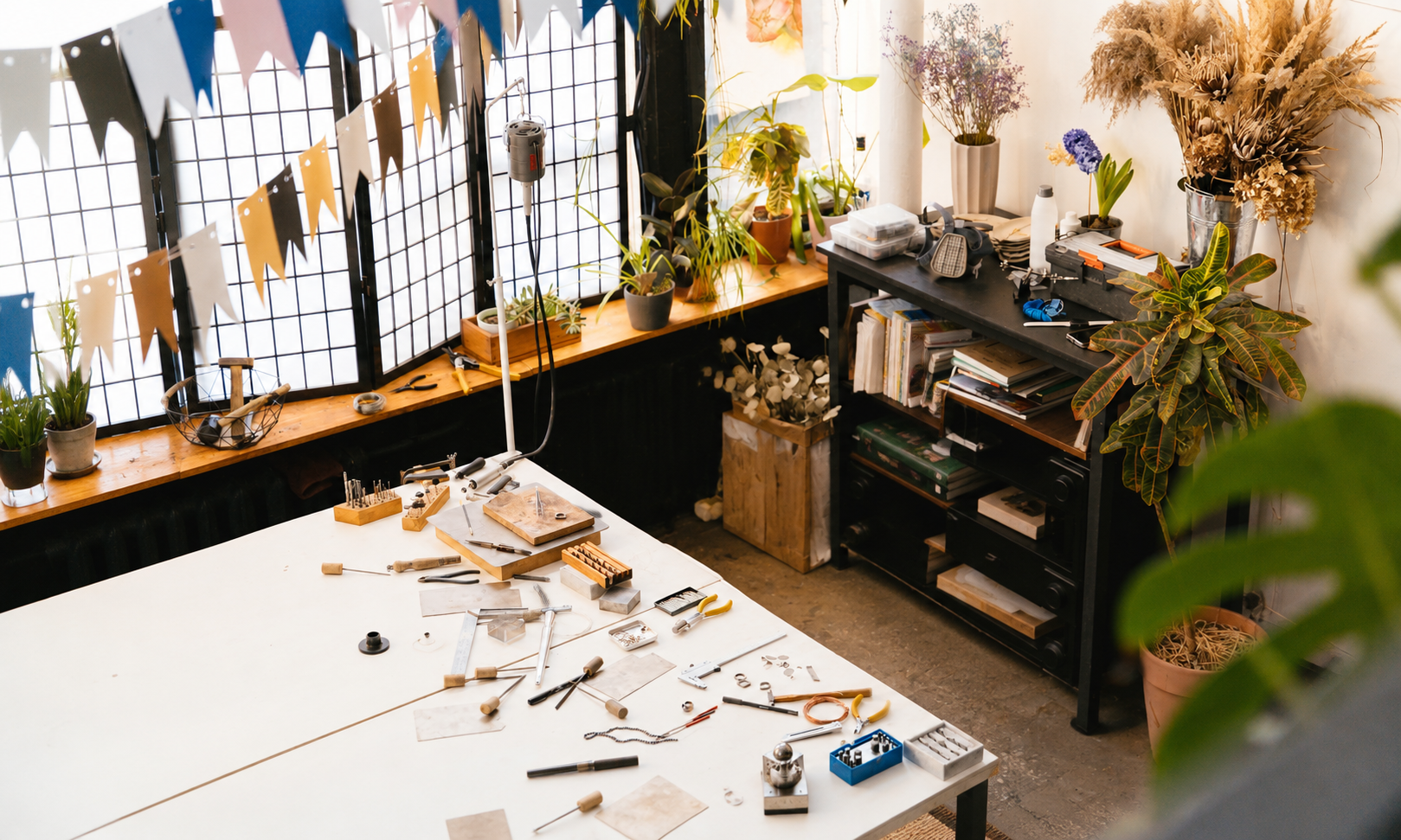
I have always learned by doing. This is where that led.
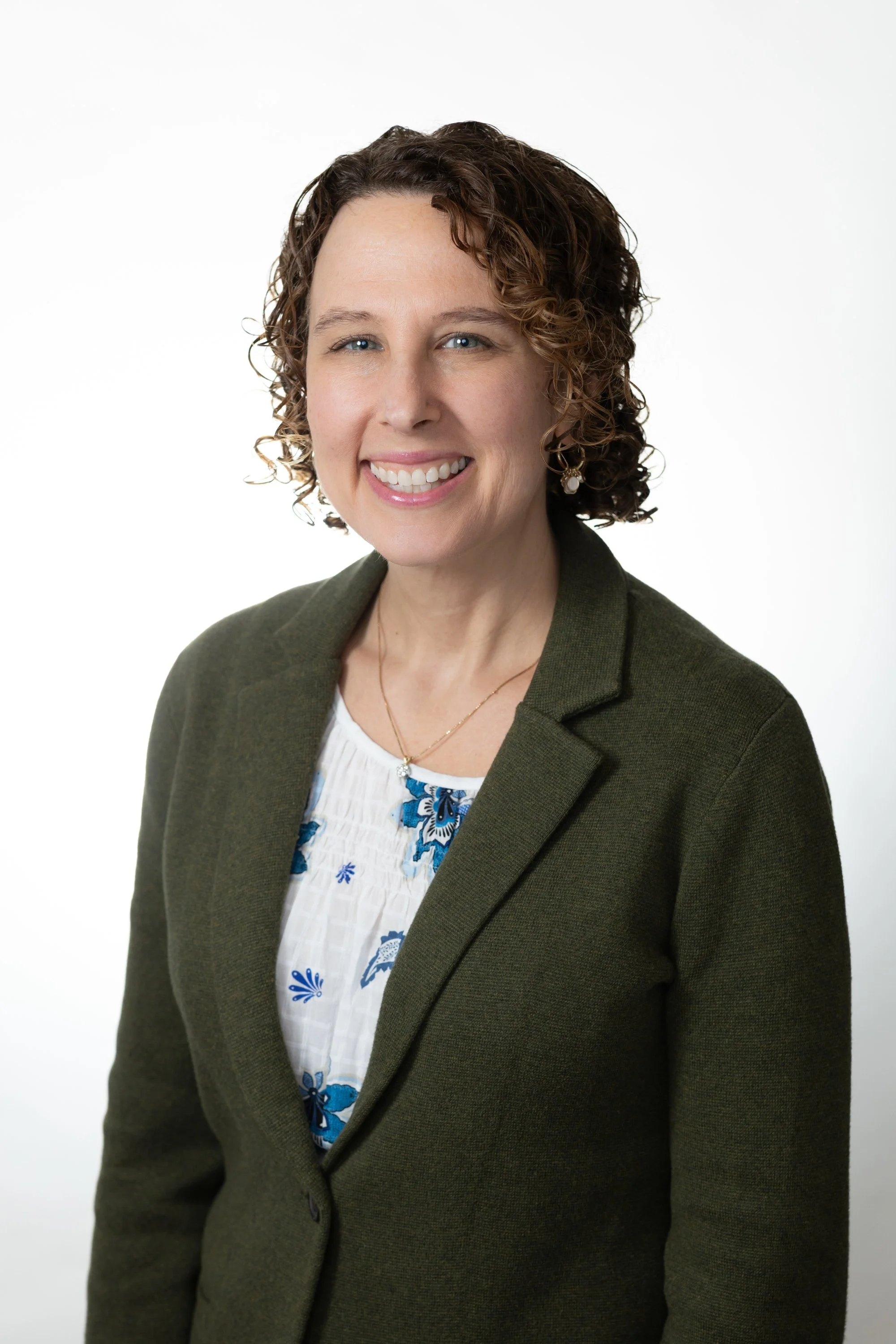

Expressive and experiential approaches have long been part of good counseling practice. Maker Therapy builds on that foundation. Through makerspace ideology and STEAM-based activities, it opens the creative process to everyone, regardless of artistic background or experience. No special talent required. Just curiosity, and a willingness to make something.
I'm Dr. Deborah Lynn Duenyas
Looking back, I can see how every experience, expected and unexpected, has led me here.
I began my career as a teacher, holding a Standard Teaching Certificate (K-8) and working with children with learning, language, behavioral, and emotional disabilities. I also taught English language instruction in Osaka, Japan, an experience that opened my eyes to the profound importance of culturally responsive, experientially grounded practice. Those early years taught me something I have never forgotten: that the most meaningful learning, and the most meaningful healing, rarely happens through words alone.
I went on to earn my Ph.D. in Counselor Education and Supervision from Kent State University and have since built a clinical career spanning settings as varied as the Cleveland Clinic's Chronic Pain Rehabilitation Program and school-based mental health services with Child Guidance and Family Solutions. I am licensed as a Professional Counselor in Pennsylvania (LPC) and a Professional Clinical Counselor in Ohio (LPCC), and I currently serve as Professor of Counselor Education at St. Bonaventure University. I have worked with adults and adolescents navigating anxiety, depression, ADHD, bereavement, self-esteem, parenting, relationships, chronic pain, and life transitions — always from an existential-humanistic, systems-informed perspective, with advanced training in Gestalt therapy, MBSR, and neuroscience-informed counseling.
My scholarly agenda centers on neuroscience-informed counseling, creativity in counseling, social justice and advocacy for marginalized populations, professional adjustment for counselors, and counseling as a global profession. I served as President of the Pennsylvania Counseling Association during the 2021-2022 academic year and have held leadership roles across the profession that reflect my commitment to advancing counseling as a field, not just practicing it.
Through every role I have held, one belief has remained constant: that the counseling room is a safe environment for curiosity and growth, and that experiential approaches offer a uniquely powerful pathway into both.
How Maker Therapy Began
Maker Therapy didn't emerge from a single moment of inspiration; it grew out of a problem I kept encountering in my clinical and academic work. I saw clients who struggled to access their inner world through conversation alone. I saw counseling students who were eager to connect with their clients in new ways but lacked a framework for doing so creatively. And I saw a broader cultural shift happening, the rise of the maker movement, the growing presence of makerspaces in schools, libraries, and communities, that the counseling profession had not yet fully acknowledged.
Creativity is widely recognized as a cornerstone of effective counseling, and yet it is rarely taught explicitly in counselor education programs. Students graduate with strong theoretical foundations and clinical skills, but without structured opportunities to develop confidence in using creative approaches (i.e., art, writing, drama, music, nature, humor). The result is that many new counselors feel neither competent nor permitted to bring creativity into the room with their clients, even when they sense it could help.
I began developing the framework that would become Maker Therapy in 2019, collaborating with Dr. Roseanne M. Perkins to build an evidence-informed approach that counselors could use with confidence and clients could experience with openness. That work led to workshops, research, and ultimately to the publication of our textbook, Creative Counseling: Empowering Health through Makerspace Innovation (Cognella, 2025).
Mindfulness & the Mind-Body Connection

Woven through everything I do is a deep commitment to mindfulness and the mind-body connection. I am a qualified, level 1 teacher in Mindfulness-Based Stress Reduction (MBSR), and the principles of mindful awareness shape both my clinical practice and my approach to Maker Therapy. I believe that true healing is holistic, that the body carries wisdom and that creative making is a natural way to access that wisdom.
When we bring mindful awareness to the act of making, something quietly powerful happens. We begin to notice — the tension in our shoulders as we work through a difficult fold, the spark of excitement when something clicks into place, the stream of thoughts moving through the mind. Without judgment, we simply attend to what is present. Making becomes a practice of focused attention, body awareness, and honest self-observation.
My Work as an Educator

I have spent my career as a counselor educator trying to close the gap between what students learn in the classroom and what they will face in the counseling room. The most effective way I have found to do that is experiential learning, giving students opportunities to practice, explore, and reflect in the same ways we hope their future clients will.
At Kutztown University of Pennsylvania, I developed a graduate course in Creative Approaches to Counseling that brought hands-on maker activities and expressive arts directly into the curriculum. That course became a living demonstration of everything I believe about how counselors learn best. I carried that philosophy with me to St. Bonaventure University, where I now teach a wide range of graduate courses.
No matter the course or the format, I am always weaving experiential work into the learning — asking students to practice skills and activities individually, in dyads, and in groups. Even online, where the temptation is to default to lecture and discussion, I look for ways to make the learning tangible and personal. That commitment is what is driving the development of a new Creative Approaches to Counseling course at St. Bonaventure, launching in 2028, designed from the ground up to deliver a rich, hands-on learning experience in a fully online environment.
Beyond the classroom, I have presented my work at the local, state, regional, national, and international level. Venues have included the Pennsylvania Counseling Association Conference, the American Counseling Association (ACA), the Association for Counselor Education and Supervision (ACES), and most recently the European Conference for Positive Psychology in Dublin, Ireland. I continue to develop workshops and continuing education opportunities for practicing clinicians and counselor educators, bringing the principles of Maker Therapy to new audiences and new contexts.
Research & Scholarship
My scholarly work focuses on the integration of creativity, makerspace ideology, neuroscience, and mindfulness into counseling practice and counselor education. I am committed to building an evidence base for Maker Therapy that supports its ethical and effective use across clinical settings, populations, and theoretical orientations.
A truncated list of my publications and presentations is available below.
Credentials & Education
Licensure & Certification
Licensed Professional Counselor (LPC) – Pennsylvania #PC01850
Licensed Professional Clinical Counselor (LPCC) - Ohio #E.1700438
Standard Teaching Certification – New Jersey #550666
Approved Clinical Supervisor (ACS) – CCE # ACS-5455
Mindfulness-Based Stress Reduction (MBSR) Qualified Teacher - Level 1
Education
Ph.D. Counselor Education and Supervision, A CACREP-Accredited Counselor Education and Supervision Program, Kent State University, 2017
M.Ed. Psychological Counseling, Teachers College, Columbia University, 2011
Post Baccalaureate Studies, New Jersey Highly Qualified Elementary Education Teacher, William Paterson University, 2004
B.A. Communication, Rutgers the State University of New Jersey, New Brunswick, NJ, 2002
Selected Publications
Published Book
1. Duenyas, D. L., & Perkins, R. M. (2025). Creative Counseling: Empowering Health through Makerspace Innovation. Cognella Academic Publishing.
Refereed Journal Publications
2. Duenyas, D.L. & Perkins, R., & Krahwinkel, J. (2025). Graduate Counseling Students’ Perceptions of a Maker Therapy Workshop: A Pilot Study. Journal of the Pennsylvania Counseling Association, 27(1). https://doi.org/10.71463/ZGET2328
3. Duenyas, D.L., *Sumiel, A., & Krahwinkel, J. (2023). Experiences of Underrepresented Masters Students in Counselor Education. Journal of Counselor Preparation & Supervision, 17(2). Retrieved from https://digitalcommons.sacredheart.edu/jcps/vol17/iss2/8
4. Duenyas, D.L., Budesa, Z., & Luke, C. (2022). Neuroscience-Informed Technology: Implications for Professional Counselors. Journal of Technology in Counselor Education and Supervision. https://doi.org/10.22371/tces/0013
5. Duenyas, D. L., & Perkins, R. (2020). Making Space for a Makerspace in Counselor Education: The Creative Experiences of Counseling Graduate Students. Journal of Creativity in Mental Health, 16(4), 537-547. https://doi.org/10.1080/15401383.2020.1790456
6. Duenyas, D. L. & Luke, C. (2019). Incorporating neuroscience into counseling practice: Lessons from teaching a graduate course. The Professional Counselor. https://doi.org/10.15241/dld.9.4.369
7. Duenyas, D. L., Akcil, S., & Osborn, C. (2019). Professional adjustment experiences of international counseling graduates. International Journal for the Advancement of Counselling, 42(1), 21-36. https://doi.org/10.1007/s10447-019-09386-6
Peer-Reviewed Book Chapters
8. Duenyas, D.L. (2026). Contributing author. In R. D. Parsons & N. Zhang (Eds.). Counseling Theory: Guiding Reflective Practice (2nd Edition). Sage.
9. Duenyas, D.L. (2022). Contributing author. In S. Springer., L. Moss, N. Manavizadeh, & A. Pugliese (Eds.). A School Counselor's Guide to Small Groups: Coordination, Leadership, & Assessment (2nd Edition). Alexandria, VA: Association for Specialists in Group Work.
10. Duenyas, D.L. (2022). Contributing author. In Hamlet, H. S. (Ed.). School Counseling Practicum and Internship. Thousand Oaks, CA: SAGE Publications Inc.
11. Duenyas, D. L. (2021). Contributing author. In R. Miller & E. T. Beeson (Eds.). The Neuroeducation Toolbox: Practical Translations of Neuroscience in Counseling and Psychotherapy. Cognella Academic Publishing.
A full CV is available upon request.
Crafty Couch Counseling
A creative approach to counseling, just for you.
Crafty Couch Counseling has always been more than a practice name — it is a reflection of my belief that healing can happen in unexpected, creative, and deeply human ways. I have had the privilege of walking alongside adults and adolescents through some of life's most challenging seasons: anxiety, depression, ADHD, grief, identity, relationships, chronic pain, and major life transitions. My approach has always been warm, collaborative, and rooted in the whole person — mind, body, and creative spirit.
Right now, my focus has shifted toward a different kind of service. I am not accepting new individual clients at this time, and I am channeling that energy into developing and offering Maker Therapy workshops and trainings for clinicians and counselor educators who are ready to bring creativity into their own work.
Closing Invitation
Whether you found your way here looking for clinical training, curious about a creative approach to your own healing, or searching for scholarly resources on Maker Therapy, I'm glad you're here.
This work is built on the belief that creativity belongs in the counseling room, that every person carries the capacity to make and to grow, and that the process of making something, anything, can open doors we didn't know were there.
I hope something on this site opens a door for you.