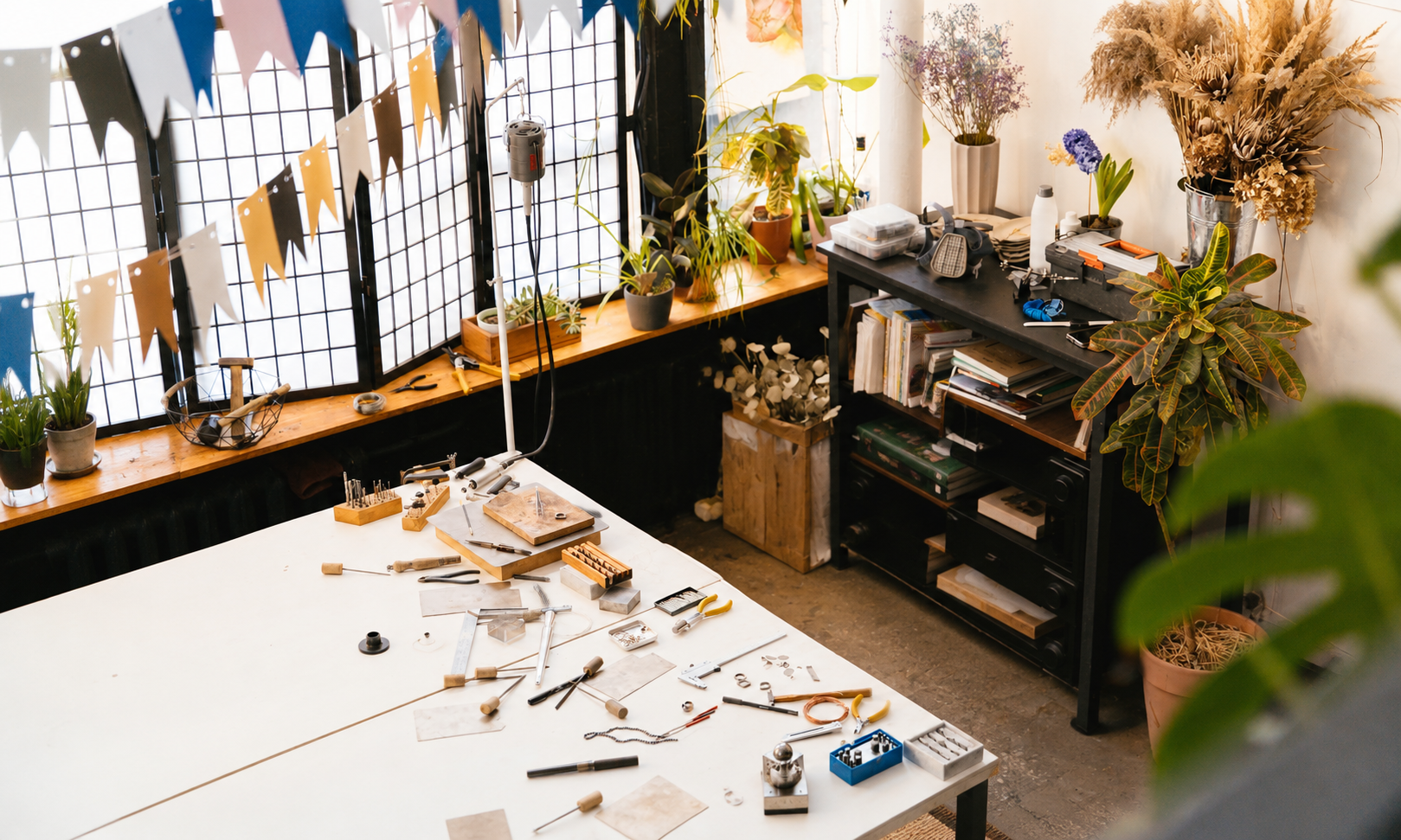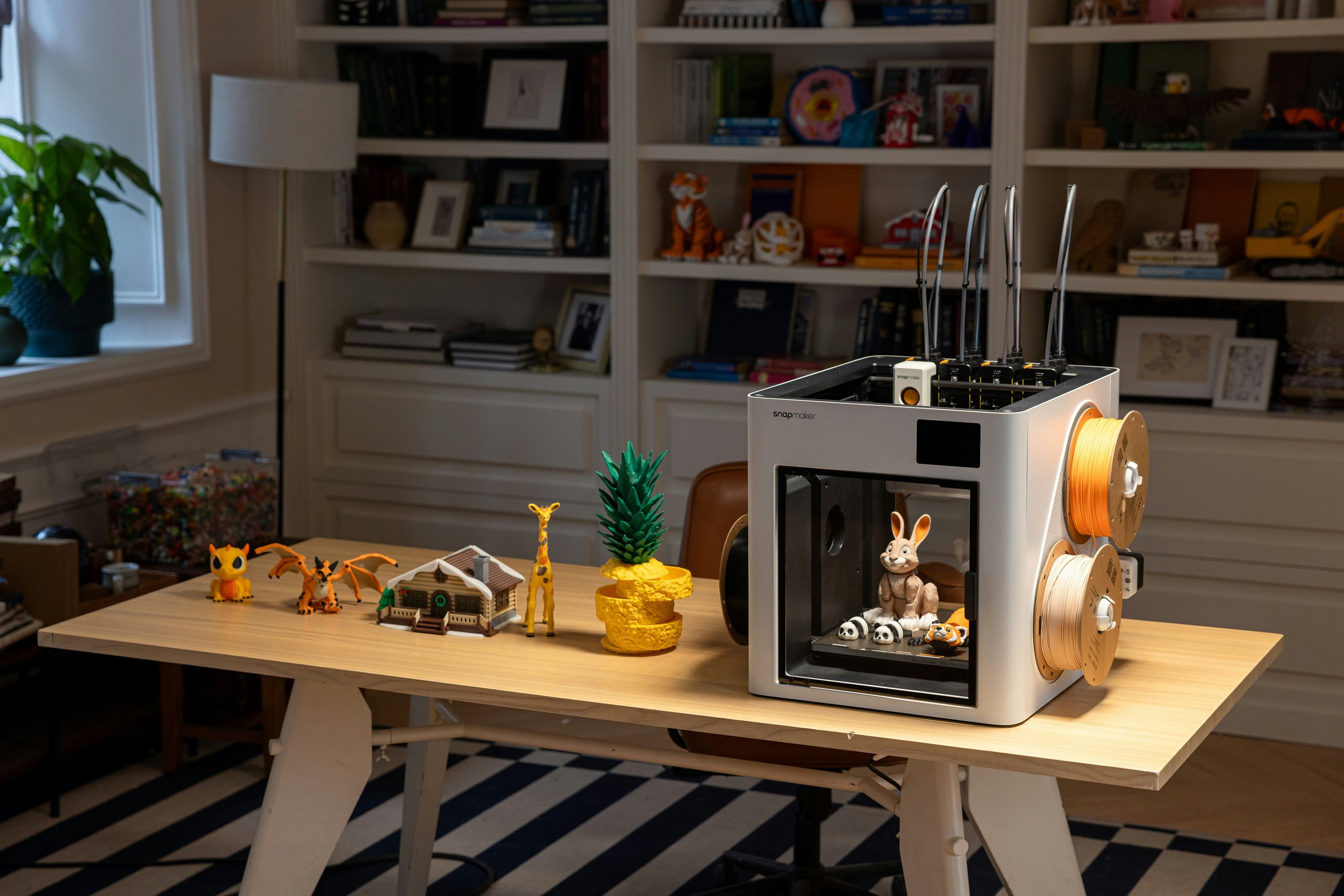
Creativity has always been part of healing. This is the framework.
Creativity has long been recognized as a powerful force in the counseling room. Art, music, drama, and play have all found their place in therapeutic practice, and for good reason. Maker Therapy builds on that rich tradition, adding something distinctly new: the intentional integration of makerspace ideology and STEAM-based activities into the therapeutic process. It is an approach that is innovative and evidence-informed, accessible to anyone regardless of artistic background, and designed to move counseling boldly into the 21st-century.
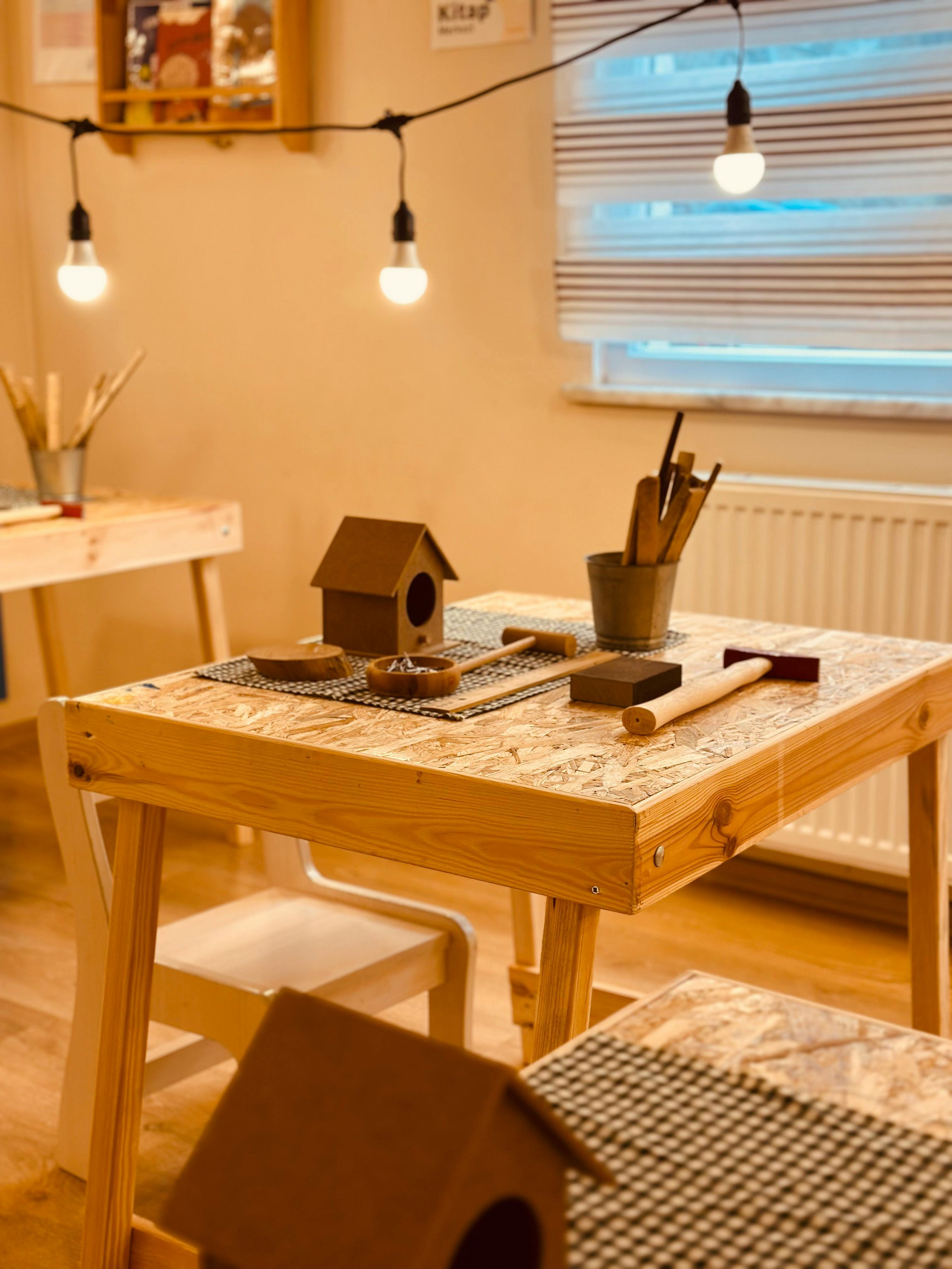
The Makerspace Movement: A Brief History
The maker movement emerged in the early 2000s as a cultural response to passive consumption, a return to hands-on creativity, collaborative making, and DIY innovation. Anchored by the launch of Make Magazine in 2005 and the rapid proliferation of makerspaces in schools, libraries, universities, and community centers, the movement introduced a new framework for learning and creating: one grounded in experimentation, iteration, STEAM-based thinking, and the belief that anyone, regardless of background or expertise, can be a maker.
As makerspaces expanded into educational and community settings, their therapeutic potential became increasingly apparent. The maker movement's core values, process over product, creative risk-taking, collaboration, and non-judgmental exploration, align naturally with the principles of effective counseling. Maker Therapy draws directly on that alignment, applying the ideology and practices of the makerspace to the therapeutic relationship in a way that is innovative, evidence-informed, and accessible to all.
Makerspace Ideology
When I first encountered the maker movement, what struck me most was not the technology or the tools (although they are very cool), it was the values. The maker movement operates from a set of principles that felt immediately and deeply familiar to me as a counselor. They were the same principles I had always tried to bring into the therapeutic relationship: curiosity over certainty, process over product, and the radical belief that everyone has something valuable to create.
Those values, what we call makerspace ideology, are the philosophical backbone of Maker Therapy. They are what distinguish it from other creative approaches to counseling, and they are what make it so therapeutically powerful.
-
What you make matters far less than what you experience in the making. Maker Therapy invites clients to release the pressure of the perfect product and enter the process, where the real therapeutic work happens. For so many people, this single shift is transformative.
-
The maker mindset embraces experimentation and revision, trying something, observing what happens, and adjusting. In the counseling room, this translates to an openness to exploration, a tolerance for uncertainty, and a growing willingness to approach challenges with curiosity rather than avoidance.
-
By drawing on science, technology, engineering, art, and mathematics, Maker Therapy ensures that the making process is accessible to everyone — regardless of interest, ability, or background. There is no single right way to make, and no single right material to make with.
-
In Maker Therapy, these are not soft skills or supplementary activities, they are the therapeutic tools themselves. Creativity opens avenues for expression. Collaboration builds connection and trust. Critical thinking supports agency and problem-solving in ways that extend far beyond the counseling session.
-
The maker movement has always believed that making is for everyone, that there is no wrong way to create, and that imperfection is simply part of the process. This belief, carried into the therapeutic relationship, creates something powerful: a space where clients can feel genuinely safe to explore, experiment, and discover without fear of judgment or shame.
What is Maker Therapy?
Maker Therapy is the intentional use of makerspace ideology and interventions to achieve therapeutic goals. It is an expressive and experiential approach to counseling that integrates creativity directly into the therapeutic process, through hands-on making activities that invite clients to build, craft, tinker, design, and create in service of their own healing and growth.
Expressive and experiential therapies (i.e., art, music, drama, play) have long demonstrated the power of creative engagement in the counseling room. Maker Therapy builds on that foundation while introducing something new: the specific ideology, tools, and spirit of the makerspace. Where other creative approaches may focus on a single medium or modality, Maker Therapy is intentionally broad, drawing on the full range of STEAM-based activities and maker materials to meet each client where they are.

Central to Maker Therapy is the belief that we are all creative. Not in the narrow sense of artistic talent or technical skill, but in the deeper sense of human capacity for expression, problem-solving, and meaning-making. Many people arrive at the counseling room carrying the quiet belief that they are not creative, a belief often rooted in early experiences of judgment, comparison, or shame. Maker Therapy begins by gently dismantling that belief, replacing it with something more true: that creativity is not a gift some people have and others don't. It is a fundamental human capacity, waiting to be invited back.
In my clinical practice, I encourage creative thinking and problem-solving to help clients strengthen self-awareness and agency while navigating challenging life transitions. The counseling room, at its best, is a safe space to explore, be curious, and grow and experiential approaches like Maker Therapy offer a powerful pathway into that kind of honest, embodied self-discovery. Making opens avenues for expression and self-awareness that words alone sometimes cannot reach, and it can feel far less intimidating than traditional talk therapy, particularly for clients who have never felt at home in a conventional therapeutic setting.
Maker Therapy is also a framework for counselor education. Creativity is widely recognized as a cornerstone of effective counseling, and yet it is rarely taught explicitly in counselor training programs. Many counselors graduate with strong theoretical foundations but without the confidence or competence to use creative interventions with their clients. Maker Therapy addresses that gap directly, building what researchers call creative self-efficacy, the belief in one's own capacity to engage creatively, alongside counselor self-efficacy more broadly. When counselors experience Maker Therapy firsthand, something shifts. The research supports this: graduate counseling students who participated in a Maker Therapy workshop reported moving from hesitation and self-doubt to genuine engagement, confidence, and a growing sense of permission to bring their own creativity into their clinical work.
The STIIR Framework
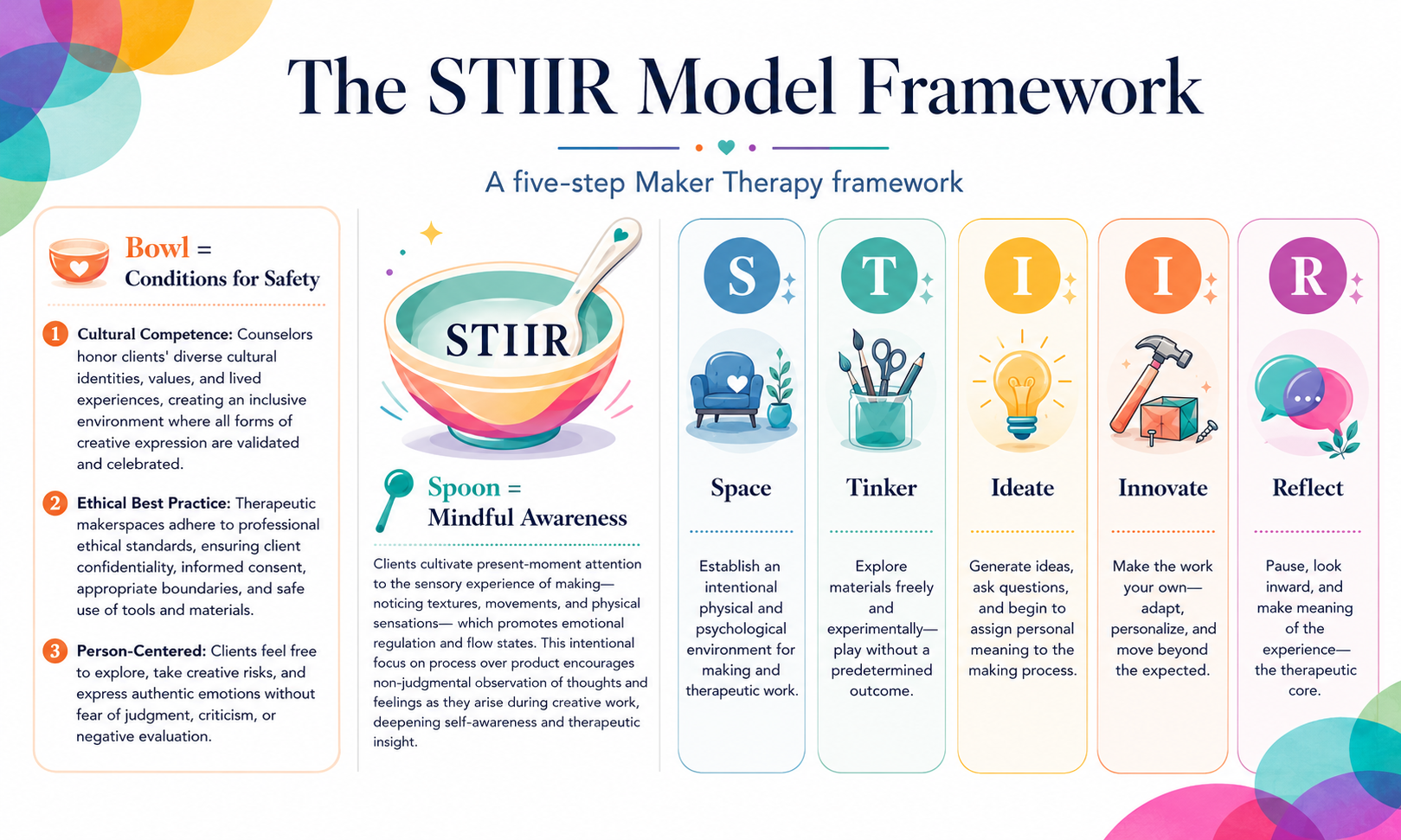
If you have ever lost track of time while working on something with your hands — folding, building, stitching, arranging — you have experienced something close to the heart of the STIIR framework. STIIR stands for Space, Tinker, Ideate, Innovate, and Reflect — a five-step road map at the core of every Maker Therapy session. It is a structure that is simple enough to follow and flexible enough to meet every client exactly where they are. Steps may circle back, overlap, or unfold slowly across sessions. What matters is not completing the model — it is using it in service of the client.
-
Before any making begins, we prepare — not just the physical environment, but the psychological one. The counselor introduces the makerspace to the client: what it is, how it works, what the expectations are. A makerspace can be as large as a dedicated studio or as small as a drawer in your desk — what matters is that it feels safe and intentional. After the introduction, we pause to ask: how are you feeling right now, entering this space? A client's answer — whether they feel excited, curious, overwhelmed, or hesitant — is rarely just about the room. It often says something important about how they approach new experiences in their life.
-
This phase is not about making anything yet. It is about becoming familiar — with what is available, and with your own responses to it. Clients are invited to pick things up, feel their weight and texture, explore the controls or pieces, and simply notice: what draws you in? What feels intimidating? What sparks energy — or hesitation? These responses are not incidental. What a client gravitates toward, and what they avoid, can be deeply revealing — reflecting inner experience, past associations, and the kind of symbolic meaning that talk alone sometimes struggles to access.
-
Now we begin to think about what we might want to make. Some clients are ready to dive in immediately — and for them, ideation is an invitation to slow down, to breathe, to be present with the possibilities before committing to a direction. Others find themselves getting stuck here — circling the possibilities without quite being able to move forward. For them, ideation becomes a gentle scaffold: a mind map, a sketch, a conversation — whatever helps them bridge the gap between thinking and doing. What I find most compelling about this phase is its clinical flexibility. The same step serves very different therapeutic purposes depending on who is in the room.
-
This is where the making begins in earnest. The client has explored the space, engaged with the materials, and thought through a direction — and now they bring that direction into form. The counselor's role in this phase is to support an experience that feels safe while offering a reasonable challenge. I find the Learning Zone Model particularly useful here — helping clients develop awareness of when they are in their comfort zone, their growth zone, or beginning to move toward overwhelm. Throughout the innovation phase, I invite clients to check in with their thoughts, feelings, and body sensations as they make. That kind of mindful self-awareness — developed in the context of a creative activity — is one of the most transferable gifts the making process can offer.
-
This is where making becomes counseling. Reflection is woven throughout every step of the STIIR model — but it is most concentrated here, at the close of the session, when the client steps back from what they have made and begins to make meaning of the experience. What was this like for you? What challenged you? What surprised you? What did you notice about yourself along the way? Using empathy, unconditional positive regard, and non-judgment, the counselor holds space for whatever arises — and highlights the client's strengths as they reflect on the challenges they rose to meet. In my experience, this is where the most unexpected and meaningful moments of the therapeutic process tend to emerge.
Types of Maker Therapy Sessions
Maker Therapy is not a rigid protocol — it is a flexible framework. Sessions are tailored to the individual client and can take one of three forms, each with its own therapeutic character and application.
-
The client selects the materials and activity; the counselor facilitates. This format is well-suited for clients with developed creative self-efficacy who benefit from the autonomy of self-directed making. The counselor's role is reflective and relational — following the client's creative lead while supporting therapeutic processing.
-
A collaborative format in which the counselor and client co-create the direction of the session. One may propose a theme or activity; the other selects the medium or approach. This balance of structure and freedom is often the most versatile format — meeting clients who are still developing creative confidence while honoring their voice in the process.
-
The counselor introduces a specific making activity with a defined therapeutic goal. This format is particularly effective for psychoeducational work, group settings, and clients who experience choice as overwhelming rather than liberating. Structure becomes the scaffolding that makes making possible.
All three session types are organized around the STIIR Model and share a common foundation: the therapeutic relationship, the here-and-now experience of making, and the belief that the process matters more than the product.
The Neuroscience Lens
Have you ever noticed that working with your hands changes how you feel? That folding, building, painting, or crafting can quiet the noise in your head in a way that talking sometimes can't?
That's not coincidence. That's neuroscience.
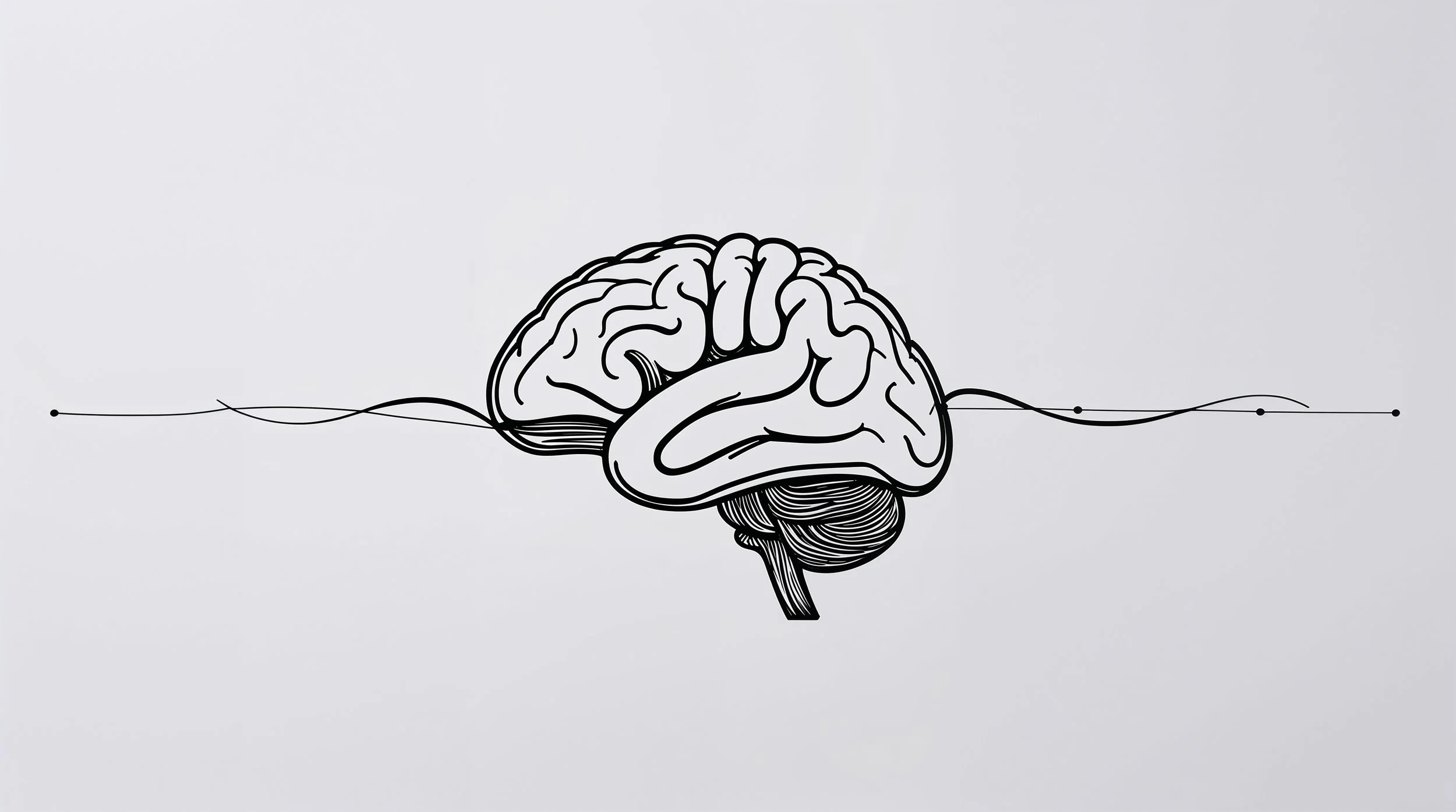
When we make something, our brains light up differently than they do during conversation. Creativity is a complex human behavior that requires multiple regions of the brain working in coordination — not isolated to any single structure or hemisphere. Multiple neural systems activate at once: the parts of the brain responsible for focus and decision-making, the sensory and motor systems engaged by physical materials, and the deeper structures involved in emotional processing and self-awareness. For many people, making creates access to emotions, memories, and inner experiences that words alone can't always reach.
You Can Teach an Old Dog New Tricks
One of the most empowering findings in modern neuroscience is that the brain never stops changing. Neuroplasticity, the brain's ability to form new neural connections, means that learning, healing, and growth are possible at every stage of life. And through neurogenesis, the brain continues generating new neurons, particularly in regions tied to learning, memory, and emotional regulation. Every time we engage in a new creative experience, we are building new pathways. Trying an unfamiliar material, working through a problem, and making something for the first time, these are not just engaging activities, they are opportunities for positive growth.
Connection Is Wired In
Making alongside others activates the mirror neuron system, the neural circuitry underlying empathy, attunement, and interpersonal resonance. In group settings, the shared experience of creating together deepens relational bonds, supports mutual self-disclosure, and cultivates compassion, for others and for oneself. We are wired for connection, and making together activates that wiring in a unique and powerful way.
Over time, this kind of creative engagement builds creative self-efficacy, the lived experience of yourself as someone capable of making, navigating frustration, and seeing something through. That confidence doesn't stay inside the session. It travels with you.
Debunking the Right Brain / Left Brain Myth
Creativity is not a fixed trait you either have or don't, and it doesn't live in just one hemisphere. Research consistently shows that creativity draws on a dynamic, whole-brain network, with systems for focused attention, spontaneous thought, and cognitive control all working together. The idea that some people are simply "not creative" is not supported by science. Every brain has this capacity. Maker Therapy is built on that belief, and the neuroscience backs it up.
Maker Therapy and Mindfulness
When you bring mindful awareness to making, the creative process becomes a mirror. You begin to notice what your body is holding — tension, energy, resistance, ease. You observe the thoughts moving through your mind without needing to follow them. You attend, without judgment, to whatever is present: the pleasant, the unpleasant, and everything in between. Making becomes a doorway into the here-and-now — and into yourself.
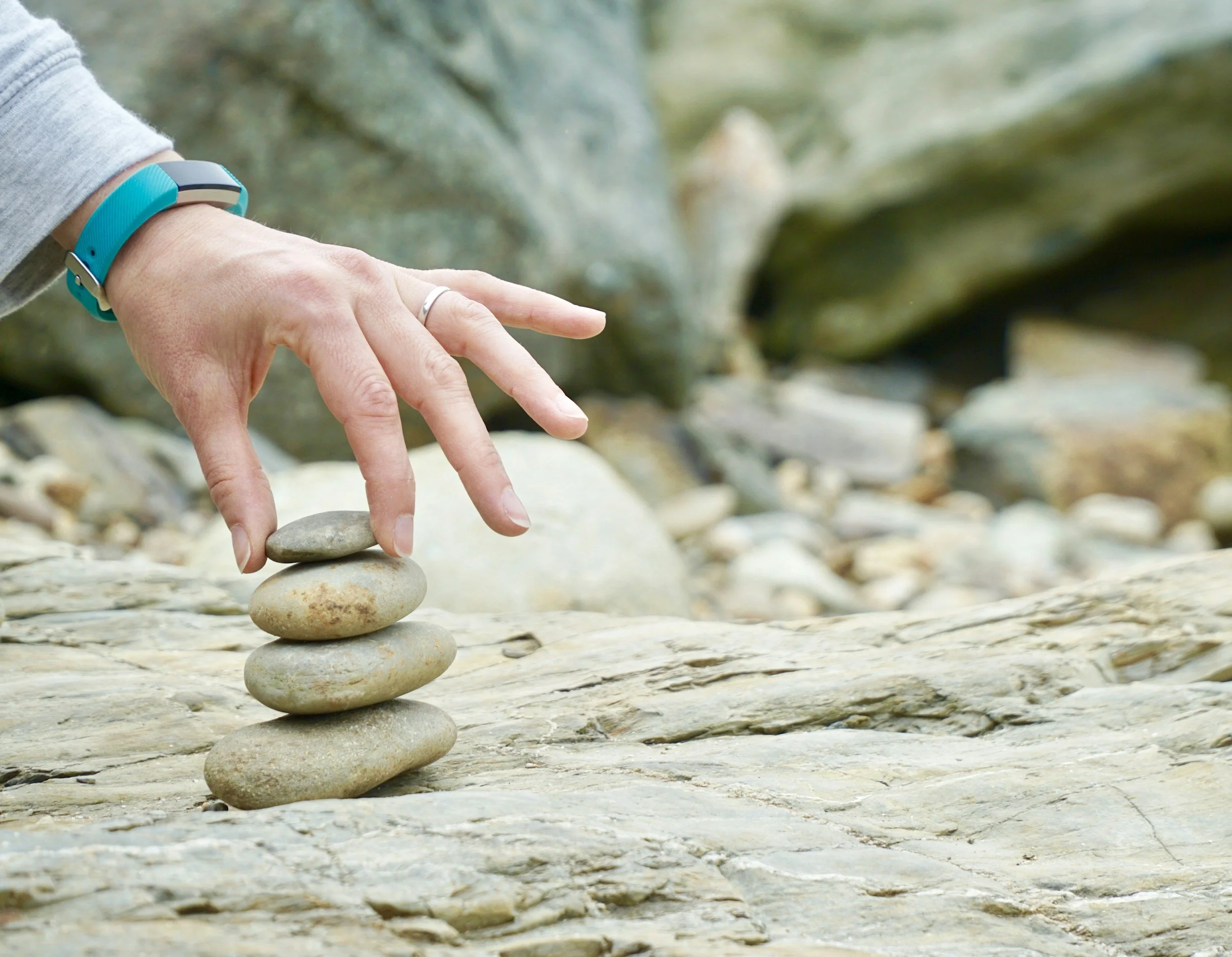
Maker Therapy is informed by mindfulness, specifically the practice of Mindfulness-Based Stress Reduction (MBSR). Jon Kabat-Zinn defines mindfulness as the awareness that emerges through paying attention on purpose, in the present moment, and nonjudgmentally to the unfolding of experience moment by moment. When this quality of attention is woven into the making process, the creative activity becomes more than expressive. It becomes a vehicle for the kind of focused, embodied self-awareness that is central to healing.
The positive benefits of mindfulness practice are well-documented and include enhanced creativity, improved focus and concentration, and expanded empathy and open-mindedness toward oneself and others. Maker Therapy brings these benefits directly into the counseling session, not as a separate exercise, but woven naturally into the act of making itself.
Making can help you focus your attention, externalize what is difficult to name, and arrive — however briefly — in the only moment that is ever actually available: this one.
Inclusivity and Accessibility
Maker Therapy begins with a simple, non-negotiable belief: creativity belongs to everyone.
Not just to artists. Not just to people with access to expensive equipment. Not just to certain ages, backgrounds, or ability levels. Everyone. The framework is built, from the ground up, on the principle that making is a universal human capacity, and that the therapeutic power of creativity should be equally available to all.
-
Art bias and creativity myths are pervasive in our culture, the misconception that creativity is accessible to only a few select people. Maker Therapy directly challenges this. The focus is always on process over product. There are no grades here, no evaluations of skill, no finished products held up for judgment. Just the experience of making, and what it opens up.
-
A Maker Therapy session can involve a 3D printer or a piece of paper. A laser cutter or a ball of yarn. A coding platform or a handful of art supplies. No-tech options include arts and crafts materials, LEGOs, recycled materials, and nature-based items. Low-tech options include basic hand tools, sewing machines, and simple electronics. High-tech options include digital fabrication, coding environments, and audiovisual tools like green screens and virtual reality. This range means Maker Therapy can be implemented in virtually any setting, at any budget, with any population. A makerspace can be a dedicated studio or a desk drawer. What matters is the mindset.
-
Counselors practicing Maker Therapy are encouraged to examine their own biases around client ability and to let clients inform the process. Taking time to understand a client's presenting concerns and any prior diagnoses helps ensure that activities are both appropriate and empowering. Best practices for accessible making include providing visual cues, offering tools that match varying cognitive and physical abilities, considering furniture and spatial setup, and anticipating sensory needs. Research has shown that accessible makerspace environments can positively affect self-esteem and independence, empowering clients to design solutions that fit their own lives on their own terms.
-
Making and creating are distinctly human activities documented in every language and in every part of the world. Maker culture is a global phenomenon, and MT interventions should be selected with the client to support their own worldviews and lived experiences. Counselors are encouraged to examine their own cultural biases and to be vigilant about how gender stereotypes and cultural assumptions can shape the activities they introduce. There is nothing inherently gendered about knitting or computer programming. Maker Therapy's breadth of materials and modalities, from fiber arts to digital fabrication, is a feature, not an accident. It ensures that every client can find a mode of making that resonates with who they are.
-
Maker Therapy can be used with clients across the full lifespan — from children and adolescents to older adults — and adapted for neurodiverse clients as well as those with physical, cognitive, or emotional differences. Research has found that makerspaces can support neurotypical and neurodivergent individuals alike, and that mixed-age and intergenerational groups can benefit from the collaborative spirit that making fosters naturally. Making is truly for everyone.
Telehealth Applications
One of the most important features of the Maker Therapy framework is its adaptability, and that adaptability extends fully into telehealth settings. Similar to traditional talk therapy, MT can be used both in person and in a teletherapy environment. The kinds of active, hands-on experiences that making promotes do not necessarily depend on physical parameters. Clients and counselors can still create together while engaging online, and in some ways, the virtual setting opens doors that a traditional office cannot.
-
In a telehealth Maker Therapy session, the client's home environment becomes part of the therapeutic space. Common household items, a piece of paper, a handful of craft supplies, items found in a kitchen drawer, become the materials. No special equipment is needed. This is one of the most powerful aspects of the no-tech and low-tech continuum: the makerspace can travel with the client.
-
For clients who are comfortable with digital tools, telehealth opens additional creative avenues. Procreate, a drawing application available on smartphones and tablets, allows clients to produce images they can share directly with their counselor. Stop-motion video, once a long and arduous process, is now quick and easy using today's apps, and encourages clients to use items from their home environment as props. This not only sparks creative expression but also brings the counselor into the client's world in a way that simply seeing a room on a screen cannot.
-
Telehealth Maker Therapy is particularly well-suited for clients who face barriers to in-person care, geographic distance, mobility challenges, scheduling constraints, or limited access to transportation. It also supports counselors building hybrid or fully virtual practices, and makes group workshops and continuing education trainings accessible across institutions and time zones. The framework's commitment to accessibility means that no-tech and low-tech activities remain fully available to clients regardless of their digital access or comfort level.
Who Is Maker Therapy For?
MT can be used with clients of all ages, abilities, backgrounds, and presenting concerns. It is not gender-specific, does not require artistic ability, and can be adapted for virtually any clinical setting or theoretical orientation.
-
MT travels with clients from childhood through older adulthood. For children and adolescents, hands-on making provides a natural, lower-barrier entry point into emotional expression. For adults navigating transitions, relationships, grief, or trauma, the making process creates access to experiences that words alone may not reach. For older adults, MT honors the skills and knowledge they bring — and research confirms that people across all age groups find it empowering to learn and create in makerspace environments.
-
MT can be used with clients presenting with anxiety, depression, grief and loss, trauma, focus and attention challenges, anger, family dynamics, relationship concerns, and substance use. The framework is flexible enough to meet each client where they are, adapted to their specific needs, comfort level, and therapeutic goals.
-
The collaborative spirit of the makerspace, where everyone contributes and no one is the expert, makes MT well-suited for individual, group, and family work alike. In group settings especially, making together activates connection and empathy in ways that conversation alone often cannot.
-
MT is also for the clinicians themselves. Maker Therapy directly builds counselor creative self-efficacy, the belief in one's ability to facilitate creative work with clients, through experiential learning and a structured, accessible framework. When counselors believe in their own creative capacity, that confidence shows up in the room.
Maker Therapy is not a niche approach. It is a framework built for the full, complex, creative range of human experience.
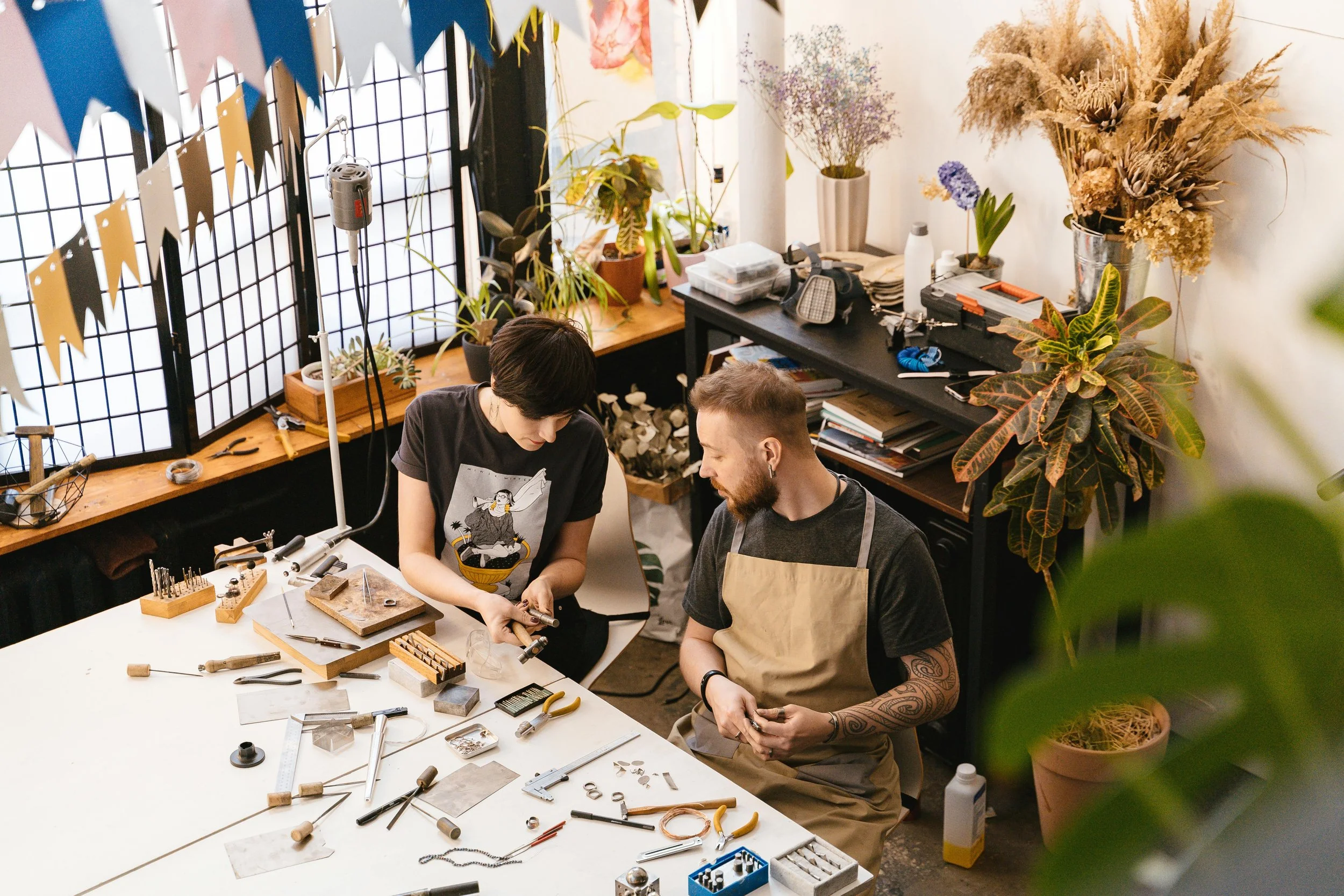
This page is an introduction. The real work happens in the making.
Maker Therapy is a living, growing framework, grounded in research, informed by practice, and designed to evolve alongside the clients and clinicians who use it. Wherever you are in your relationship to this work, there is a next step available to you.
Ready to learn?
Explore upcoming workshops, designed for clinicians, counselor educators, and anyone curious about bringing Maker Therapy into their practice.
Ready to make?
Browse the free resource library for downloadable activities, mindfulness tools, and recommended reading, no paywall, no prerequisites.
Ready to go deeper?
Pick up a copy of Creative Counseling: Empowering Health through Makerspace Innovation, the book that started it all.
Ready to connect?
Reach out directly or follow along for updates, new resources, and workshop announcements.
Connect →